Campus Product Launch: A Practical Field Plan
Launching a product on campus? Here's how to line up students, events, sampling, and creators into one rollout, and what a realistic recap should tell you afterward.
By Collegiate Agency
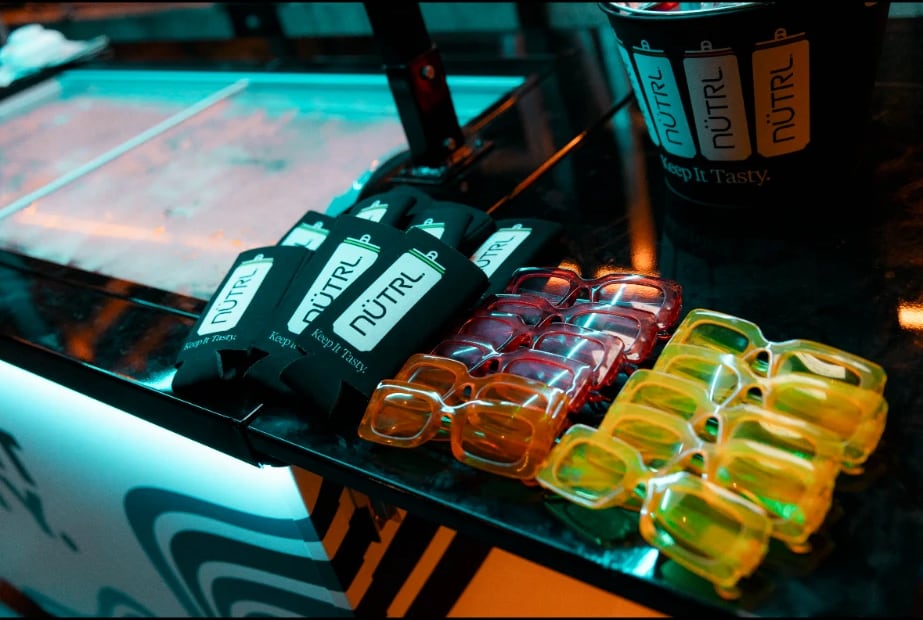
Photo: Collegiate Agency. Photographed at a Collegiate Agency activation.
A campus product launch is not just a smaller version of a national launch. Students move through tight social circles, crowded weekly routines, group chats, nightlife plans, club meetings, class schedules, and campus traditions. If your product shows up in the wrong place, students ignore it. If it shows up through the right people at the right moment, it can feel like it belongs.
That is the goal. You are not trying to force a brand message onto campus. You are trying to build enough trusted contact points that students understand what the product is, see peers interacting with it, and know what to do next.
For brand marketers, the planning challenge is usually not creativity. It is sequencing. You need to pick the right campuses, define the student audience, choose the launch moments, brief the people representing the brand, and decide what proof will matter after the first push. Use this guide as a practical field plan before you spend on sampling, ambassadors, creators, or events.
Start with the launch job, not the tactic
Before you pick schools or hire students, define what the launch has to accomplish. A campus product launch can serve several different jobs, and each job changes the plan.
If the product needs trial, your plan should center on hands-on student interaction: tastings, demos, dorm drops, retail-adjacent sampling, fitness or wellness moments, welcome-week setups, or campus events where students have time to stop. If the product needs trust, you may need college brand ambassadors who can explain it through peer conversations over several weeks. If the product needs content, you may need student creators or campus influencers who can show how the product fits into real student routines.
Write the launch job in one sentence:
- We need students to try the product for the first time.
- We need students to understand a new use case.
- We need students to connect the product with a campus occasion.
- We need students to download, sign up, redeem, or visit a retail partner.
- We need content that makes the launch feel active across multiple schools.
A clear job keeps the program from becoming a scattered mix of giveaways and posts. It also helps you say no. If a tactic does not help the launch job, it should not take budget.
Choose campuses by behavior, not name recognition
Big schools are tempting because they sound impressive in a recap. That does not mean they are the right first markets. You need campuses where the student behavior matches the product and where the launch can be executed cleanly.
Start with a short campus scorecard. Rate each possible school against the factors that actually matter:
| Campus filter | What you are checking | Why it matters |
|---|---|---|
| Audience fit | Does the student body match the product buyer or user? | A large school is not useful if the target student is not there. |
| Occasion fit | Is there a natural moment for the product: game day, nightlife, move-in, wellness, finals, spring break, tailgate, club life? | Products land faster when they connect to a real routine. |
| Distribution path | Can you reach students through events, reps, creators, retail, dorms, or organizations? | Good strategy still fails without access. |
| Execution risk | Are rules, timing, staffing, shipping, and weather manageable? | A launch should be ambitious without being fragile. |
| Recap value | Will the campus teach you something useful for the next market? | Early markets should create learning, not just activity. |
This is where a campus plan becomes more serious than a school list. A launch at ten mismatched campuses can be weaker than a focused launch at three schools with the right audience, staff, and social calendar.
Build a launch sequence students can follow
Students rarely convert from one touch. They need to see the product, understand why it matters, and get a simple next step. Your launch sequence should create that path without overwhelming them.
A strong sequence usually has four layers.
First, seed awareness before the main activation. That can mean ambassador posts, group-chat sharing, creator teasers, flyers where appropriate, club outreach, or RSVP pushes. The goal is not to make every student care immediately. The goal is to make the brand feel familiar when the main moment arrives.
Second, create an in-person moment. This could be a pop-up, event integration, branded booth, sampling route, sponsored student event, dorm-area handoff, nightlife activation, or campus-adjacent venue moment. Keep the experience simple. Students should know what the product is, why they should try it, and what they can do after.
Third, send students somewhere. That could be a discount page, retail location, social follow, text list, app download, waitlist, QR form, or campus-specific offer. Do not bury the next step under five calls to action. Pick one primary action and make it easy.
Fourth, extend the launch with peer proof. Ambassadors can keep talking after the event. Creators can post recap content. Student organizations can share reminders. Your team can retarget or follow up if you have permission-based data. The launch should not disappear the moment the table folds up. Plan the collection and access controls around the NIST guidance on limiting and protecting personal data, rather than keeping every student detail by default.
Use reps, creators, and events for different roles
A common mistake is asking every channel to do the same job. Events, reps, and creators work best when each has a defined role.
Events create the shared moment. They give students a reason to stop, try, ask questions, take photos, and connect the product with a real campus occasion. If you are planning around music, nightlife, welcome week, tailgates, finals, or club culture, events can anchor the launch.
Student reps create continuity. They can talk to peers before and after the event, distribute product in smaller settings, answer questions, and keep the brand visible after paid media or the launch day ends. A rep program should have clear deliverables, communication rules, proof requirements, and a backup plan if someone drops.
Creators create interpretation. They show the product in a way that feels native to student life. Do not pick creators only by follower count. Check whether their audience actually includes the campus or student segment you want. Check tone, content history, school connection, and reliability.
If you need help connecting those roles, start with the channel that solves the main launch job. Then add the other channels only where they make the plan stronger. For example, a beverage sampling launch might use an event as the main trial moment, ambassadors to drive traffic, and creators to show the product before and after the event.
Keep the operating plan boring and specific
The best campus launch plans are not vague. They are operational. You should know who is doing the work, where product is going, when students will see it, what language reps can use, what proof is required, and what happens if a campus changes the plan late.
Use this launch checklist before approving spend:
- Confirm the primary launch job and the one student action you want.
- Pick campuses with a written reason for each one.
- Assign a channel role: event, ambassador, creator, sampling, retail, or organization partnership.
- Define who owns recruiting, training, shipping, staffing, permits or venue coordination where needed, and on-site management.
- Write a simple student-facing message that a rep can say naturally.
- Build a product and asset tracker: inventory, signage, QR codes, sample counts, content briefs, and recap requirements.
- Set the proof standard before launch: photos, check-ins, sample counts, creator links, ambassador reports, student feedback, redemptions, or sign-ups.
- Create a same-day escalation path for weather, shipping delays, low traffic, student no-shows, or venue changes.
- Schedule the post-launch recap while the team still remembers what happened.
This checklist is not glamorous, but it protects the campaign. Campus work has a lot of small failure points. The more specific the plan is before launch, the less your team has to improvise in front of students.
Measure what helps the next campus get better
Do not judge a campus product launch only by how busy it looked. A crowded table can still fail if students did not understand the product or take the next step. A smaller activation can be valuable if it shows exactly which message, school, occasion, or student group should come next.
Set measurement around the launch job. For trial, track product distributed, interaction quality, student questions, repeat interest, and redemption where available. For awareness, track content output, creator links, social saves or shares when platform data is available, and student feedback themes. For acquisition, track sign-ups, scans, offer redemptions, or store visits only when those paths are actually instrumented.
Be careful with inflated recap language. If you cannot verify a number, do not put it in the report. A useful recap should separate confirmed activity from observations and recommendations. Your leadership team needs to know what happened, what it means, and whether the next campus should be repeated, adjusted, or dropped.
If you are ready to turn a launch from a deck into a field plan, start with the campus role, student action, and operating checklist. Then build the event, ambassador, creator, and sampling pieces around that plan. When you want support mapping campuses, reps, and activation moments, talk with Collegiate Agency before the launch window gets tight.
Planning a campus activation?
Plug into the Night School Tour and our welcome-week network across campus markets. Tell us the goal and we will come back with a plan and firm pricing.
Student, not a brand? Apply to the ambassador network.