Campus Pop-Up Activation: A Field Plan for Brands
A campus pop-up is a short build on someone else's ground. Plan the permission, the footprint, the crew, and the hour you will tear down.

Photo: Collegiate Agency. Photographed at a Collegiate Agency activation.
A campus pop-up activation is a short brand build on a campus, or on ground the campus controls, for a set hour, with permission to stand there and a plan to leave. It is not a content series and it is not a permanent shop. Collegiate Agency runs that date as a campus event, and this page covers the permission, the footprint, the crew, and the hour the build comes down.
What has to be true before a pop-up is a plan?
Name the ground. A quad, a student-center lobby, a venue lot, and a city sidewalk in front of campus are four different approvers. Write the one you mean. Write who signs, and the date the signature has to be in hand. If that date passes with no signature, the freight does not ship.
One public example of that kind of rule is the University of Florida regulation on commercial activity. It requires express written permission before someone enters that campus for commercial activity, which the regulation describes as an act or event that results in financial gain. A registered student organization that sponsors an off-campus vendor also needs an event permit for that date. That is one university's text. It is not a national permit. Another school, a city, or a landlord can ask for something else. Collegiate Agency still expects the brief to name the document for the ground you picked.
Campus events are the service that staffs the date, from a small activation to a presenting package, priced from $500 to $500,000. If the pop-up also puts product into a student organization's hands under the placement offer, that line is product placement at $1,500 per sorority (chapter). Do not hide the placement inside the build fee. The pricing page is the rate card. A pop-up the card does not cover is quoted per campaign.
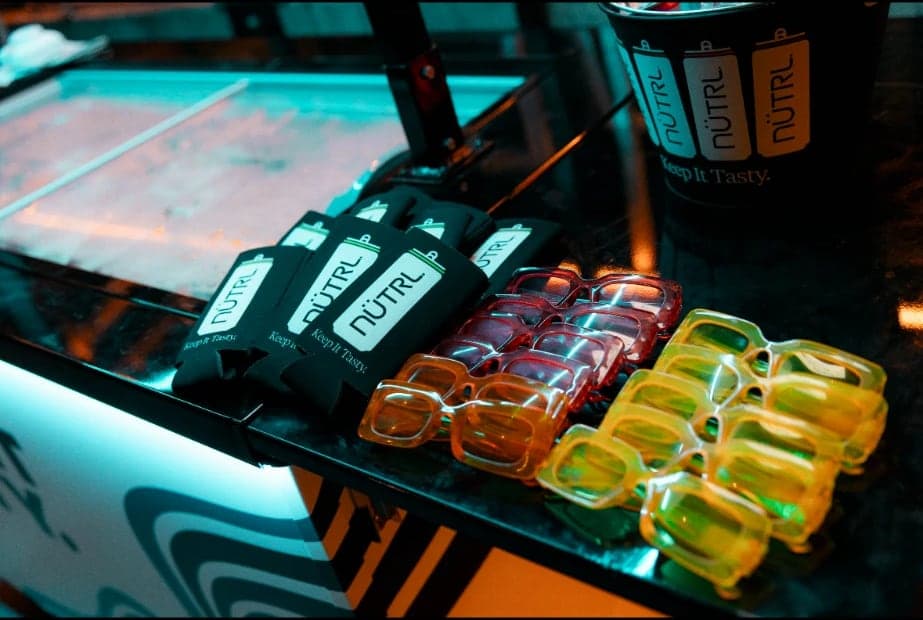
The cart in that photograph is a giveaway layout from an activation Collegiate Agency ran. It is a useful picture of a small footprint. It is not permission to roll the same cart onto a quad. The footprint in your brief should say how wide the build is, where the line forms, where power comes from, and which path has to stay open. A build that blocks a door or a fire lane is not a creative choice. It is a reason for the campus to shut the date down.
What does the crew do, and what do the guests stay?
The crew builds, staffs, and strikes. Guests try the product, take a photo, or walk past. Those are different people. Do not write the recap so that everyone in a picture becomes staff. The step-and-repeat frame on this page shows two attendees holding BEATBOX cartons. The artwork behind them is a film's own backdrop. The film, its studio, and its cast are not Collegiate Agency clients, and the photo is not a claim that they are.
If the pop-up includes sampling, use the campus product sampling agency guide for the unit count and the handling rule. This page does not restate that contract. If the pop-up is only a photo moment with no sample, say so, and do not pay for a sample line.
| Item | Pop-up | General activation |
|---|---|---|
| Time on site | A defined open and a defined strike | May run across a day or a weekend |
| Footprint | Small, named, and removable | Can include a larger build |
| Permission | Still required before freight ships | Still required before freight ships |
| Proof | The ground, the hour, the count you set | The same, plus any extra dates you bought |
The permission row does not get easier because the build is small. A one-hour cart can need the same signature as a larger tent. The difference is the strike. A pop-up that is still on the quad the next morning was not a pop-up. Put the strike time in the contract and say who confirms the ground is clear.
Planning a campus activation?
Plug into the Night School Tour and our welcome-week network across campus markets. Tell us the goal and we will come back with a plan and firm pricing.
What should the quote and the recap contain?
Ask for the campus, the approver, the open, the strike, the crew size, the product if any, and the count you will check. A count can be samples handed out, conversations you defined in advance, or posts the crew was assigned. Pick one. Do not accept "engagement" as the count. You cannot audit a word that the agency gets to define after the day.
Collegiate Agency replies within one business day with a tailored plan and firm pricing after you send the ground and the date. The plan should say whether the date is inside the published event range or is a custom quote. It should also say what you get back if the campus refuses. A refused pop-up is not an invitation to keep the fee and email a gallery from a different school.

Use photographs that match the date you bought. The pair in that frame are attendees at a venue event. They are not a pop-up crew, and the caption should not call them one. When the recap arrives, match each photo to the campus and the hour. If the agency cannot, the photo is not proof.
What do you send, and what do you turn down?
Turn down a proposal that uses the words pop-up and never names the ground. Turn down a build drawing with no strike time. Turn down a budget that asks your interns to staff the hour the agency priced. Turn down a case study photo that the agency will not locate.
Send this sheet:
- The ground, the approver, and the permission deadline.
- The open, the strike, and who confirms the site is clear.
- The footprint, the power, and the path that stays open.
- The product or the offer, and the one count you will check.
- The crew, and the work your team will not do.
- The stop rule if permission is late.
When the sheet is filled, contact Collegiate Agency with the campus and the week. A pop-up is a short date. The brief should be short too, and it should still be specific enough that a person who was not in the pitch can tell whether the day happened.
The broader buying questions, such as how to compare agencies for a multi-day activation, stay on the campus brand activation agency checklist. Use that page when the buy is a full activation program. Use this page when the buy is one removable build with an open and a strike. Mixing the two in one statement of work is how a one-hour cart gets priced like a weekend and still has no permission line.
If the campus you want is outside the published network of 21 schools, say so in the first note. Collegiate Agency will tell you whether that ground can be staffed on the week you named. A pop-up does not become easier because it is temporary. The signature, the path, and the strike are the work. The backdrop and the paint are what students see after those three are done.
Questions brands ask
What is a campus pop-up activation?
- A campus pop-up activation is a short brand build on a campus or next to one, for a defined hour, with permission to be there. It is not a permanent store and it is not a post. Collegiate Agency staffs campus events from $500 to $500,000. The pop-up still needs an approver, a footprint, a crew, and a time to leave. A mood board is not that plan.
Who has to approve a pop-up on campus?
- The campus, the venue, or the student organization that controls the ground has to approve it. The University of Florida's commercial-activity rule is one public example of written permission before an off-campus vendor comes on campus. Collegiate Agency treats that class of document as part of the brief. Another school can require a different form. Ask before the freight ships.
What should the pop-up footprint include?
- Write the size of the build, the power, the line, the sample or the product, and the path people walk. Collegiate Agency will not assume a quad allows a structure, a generator, or a sale. Put the tear-down hour in the same paragraph as the open hour. A pop-up that cannot leave on time is an event the campus did not approve.
How should a brand judge a pop-up quote?
- Judge it by the campus, the date, the crew, and the count you defined. Collegiate Agency publishes event packages from $500 to $500,000 and replies within one business day with firm pricing after you send the brief. Refuse a quote that says pop-up and never names the ground it will stand on. Refuse a photo from another event offered as proof of this one.
Planning a campus activation?
Plug into the Night School Tour and our welcome-week network across campus markets. Tell us the goal and we will come back with a plan and firm pricing.
Student, not a brand? Apply to the ambassador network.