Campus Product Sampling Ideas That Drive Real Trial
Sampling only pays off when the moment, the placement, and the follow-up are planned together. Here are campus sampling ideas built around trial that actually sticks.
By Collegiate Agency
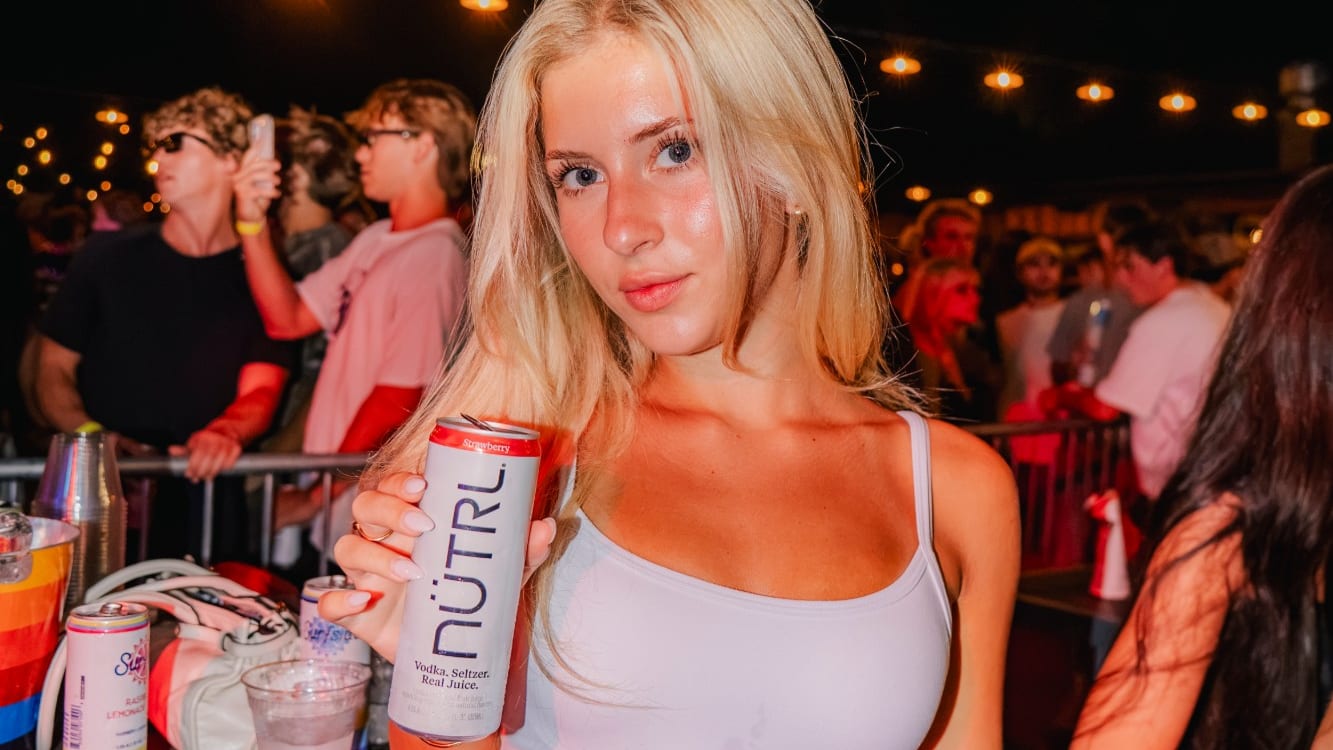
Photo: Collegiate Agency. Photographed at a Collegiate Agency activation.
Most campus sampling fails quietly. You ship a pallet of product, a few people hand it out near a busy walkway, students take a free thing, and everyone moves on. The units disappear, the recap says the day "went great," and nothing in your sales or install data moves. The problem is rarely the product. It is that the sample was treated as the whole plan instead of the first step in one.
Trial only works when a student remembers what they tried and has an easy reason to try it again. That means the moment, the placement, and the follow-up have to be planned together, before the first case leaves the warehouse. A sample given at the wrong time, with no way to buy again and no way to measure what happened, is just inventory you paid to give away.
This guide walks through campus sampling ideas that are built around conversion, not volume. You will get concrete formats and moments, a way to match them, and the operational details, staffing, permissions, and measurement, that decide whether trial turns into repeat.
Start with the moment, not the product
The single biggest lever in campus sampling is timing. The same sample handed out on the wrong day gets tossed; handed out at the right moment, it lands. Students are creatures of routine and calendar, so map your activation to a moment when they are already primed to notice and receptive to trying something.
A few moments consistently outperform a random Tuesday on the quad:
- Dorm move-in. Students and parents are arriving, stressed, and open to anything that makes settling in easier. Personal care, snacks, cleaning, food delivery, and app-based services all fit the mindset. It is also one of the few times you reach freshmen before their habits set.
- Welcome week and org fairs. High foot traffic, a discovery mindset, and students actively collecting things. Good for broad awareness, but you compete with hundreds of tables, so the offer has to stand out.
- Class-change high-traffic spots. The 10 to 15 minute windows between classes concentrate huge numbers of students through the same corridors and plazas. Great for volume, harder for conversation.
- Tailgates and game days. High energy, longer dwell time, and a social setting where trying something is normal. Strong for beverage, snacks, and anything social.
- Gym and rec centers. A focused audience in the right headspace for wellness, hydration, protein, recovery, and fitness apps.
- Finals and late-night study periods. Fatigue and stress make energy, coffee, snacks, and productivity tools genuinely welcome.
Pick the moment first, then choose the format that fits it. That order keeps you from forcing a demo-heavy activation into a 12-minute passing rush, or a passive handout into a setting that would have supported a real conversation.
Match the format to the moment
Not every sampling format works everywhere. A booth that needs 90 seconds of explanation is wrong for a class change; a silent handout wastes a tailgate where students would happily talk. Use the table below to match format to moment before you lock a plan.
| Sampling format | Best-fit moment | What it is good for |
|---|---|---|
| Staffed booth with demo | Welcome week, org fairs, rec centers | Products that need explanation, first-hand experience, or a quick how-to |
| Grab-and-go handout | Class changes, high-traffic corridors | Volume and awareness for simple, self-explanatory products |
| Move-in kit or drop | Dorm move-in, off-campus housing | Reaching new students early, pairing multiple products in one useful bundle |
| Tabling at an event | Tailgates, concerts, intramurals | Social trial with dwell time and room for conversation |
| Ambassador-led seeding | Greek life, clubs, dorm floors, teams | Peer-to-peer trial inside real friend groups |
| Retail or venue partnership | Off-campus, near-campus stores and bars | Trial next to the point of purchase so buying again is one step away |
The formats are not mutually exclusive. A strong campus program often runs two or three at once: a staffed booth at welcome week, ambassador seeding inside Greek houses and clubs the same week, and a retail tie-in nearby so students can buy what they tried. That combination is worth planning as one integrated push, which is where events and structured field staffing come in.
Use ambassadors and Greek life for trial that spreads
A stranger handing you a sample is easy to ignore. A friend saying "try this, it's actually good" is not. That is why ambassador-led seeding tends to convert better than anonymous handouts, even at lower volume. When you put product in the hands of students who are already trusted inside a floor, team, club, or Greek chapter, the sample arrives with a recommendation attached.
Practical ideas that lean on peer distribution:
- Give brand ambassadors product to seed within their own networks, dorm floors, teammates, study groups, and chapters, with a simple prompt for what to say and a link or code to pass along.
- Work with Greek life through chapter events, philanthropy tie-ins, or house drops, where a single contact can reach dozens of students in the right social context.
- Supply club and team leaders with sampling for meetings and practices, so trial happens inside a group that already meets regularly.
The key is structure. Give ambassadors a clear role, a message they can say in their own words, a deadline, and a way to report what they distributed and what students said. Peer seeding that is not tracked becomes invisible, and invisible activity cannot be measured or repeated.
Pair every sample with a reason to buy again
This is the step most sampling programs skip, and it is the one that separates trial from waste. A free sample creates a single positive experience. Without a bridge to the next purchase, that experience fades. Your job is to make the second step obvious and easy at the moment of trial.
Attach at least one of these to every sample:
- A QR code that leads somewhere useful: a discount, a store locator, an app install, or a short sign-up. Print it on the sample, the sleeve, or the card that goes with it.
- A first-purchase discount or code that gives a concrete reason to act soon rather than "someday."
- Clear where-to-buy information. If students loved it but cannot find it, you lose them. Tell them the nearest store, the delivery option, or the online link.
- A sign-up prompt for email or SMS, so you can reach them again after the sample is gone.
Keep the ask small and single. A student mid-stride will scan one QR code or take one card; they will not fill out a long form or remember three instructions. Decide the one next action you want, whether that is a scan, an install, a code redemption, or a store visit, and design the sample around it. This is the heart of smart product placement: the sample is not the goal, the next purchase is.
Get staffing, permissions, and compliance right
The best sampling idea falls apart on logistics. Two things quietly ruin activations: understaffing and missing permissions. Solve both before the date. For food samples, use the CDC guidance on clean, separate, cook, and chill as a handling reference alongside the venue rules and your product-specific safety plan.
On staffing, put people who can represent the brand, not just hand things out. A good sampling staffer makes eye contact, gives the one-line pitch, points to the QR code, and answers the obvious question. Estimate your traffic honestly and staff for the peak, not the average, or your busiest window becomes your worst window. Brief the team on the product, the single next action, and how to log what they distribute.
On permissions and compliance, confirm access early:
- Campus approvals. Most schools require permits, reservations, or sponsorship through student affairs, dining, or a campus org to sample on university property. Assume it takes time and lock it before you build the run of show.
- Age and category rules. Beverage, supplement, and personal care products often carry age gates, ingredient disclosures, or restrictions on where they can be handled. Alcohol and anything regulated needs its own legal review.
- Off-campus alternatives. When campus access is slow or restricted, off-campus housing, near-campus retail, and partner venues can be faster and put you closer to the point of purchase anyway.
Use a short pre-activation checklist so nothing slips:
- Moment and date confirmed against the academic calendar (avoid breaks, finals, and dead weeks)
- Campus or venue permission secured in writing
- Product quantity, shipping, and storage arranged
- Staff booked, briefed, and scheduled for peak traffic
- The one next action decided and printed on the sample (QR, code, where-to-buy)
- Tracking in place for units, scans, sign-ups, and redemptions
- Recap owner and reporting format assigned before the day
Measure with real inputs, not buzz
If the recap says the activation "created buzz," you learned nothing you can act on. Sampling is measurable if you decide what to capture before you start. Because you attached a reason to buy again, you have real inputs to count.
Track the inputs that map to trial and conversion:
- Units distributed so you know true reach and cost per sample.
- QR scans and link clicks to see how many students took the next step.
- Sign-ups captured for email or SMS follow-up.
- Code redemptions and first purchases, the closest signal to real conversion.
- Field notes from staff and ambassadors on questions, reactions, and what slowed the team down.
Use these to compare formats and campuses honestly. If move-in kits drove more redemptions than the class-change handout, that tells you where to put budget next time. If one campus scanned well but redeemed poorly, the offer or the where-to-buy path may be the weak link. Real inputs turn a one-off sampling day into a repeatable model, and let you decide whether to repeat a market, expand to similar ones, change the format, or stop. For a deeper look at building experiences students actually engage with, see our take on Gen Z experiential marketing.
Good campus sampling is not about how many units you can move in an afternoon. It is about choosing a moment students are ready for, matching the format to that moment, giving every sample an easy next step, and tracking what actually happened. Plan those pieces together and trial starts to show up in your sign-ups, scans, and repeat purchases instead of a vague recap. When you are ready to build a sampling program that converts, send the brief here and we will help shape the first test.
Want product in students' hands?
Place product directly into campus events, student organizations, venues and ambassador-led content. Price a run across the campuses you care about.
Student, not a brand? Apply to the ambassador network.